me
nu


What is AEO? A Simple Guide to Answer Engine Optimization (And Why Your SEO Strategy Needs a Reboot)


I got a newsletter last month from a fellow blog and Pinterest manager I admire, and I was genuinely excited to read her take on consistency in blogging. She started off talking about how much of her googling these days provides her with answers in the form of blog posts. Her take: “If your content is clear, helpful, and optimized, it might get pulled into the AI-generated responses people are reading first before they even scroll down to the regular results.”
Fair. That’s true…ish.
But then she went on to say that “the ones we’re most likely to click on are at the top of the search results,” and… yes, that is inherently true. But I’m not going to lie: I was shocked when she didn’t address the elephant in the room.
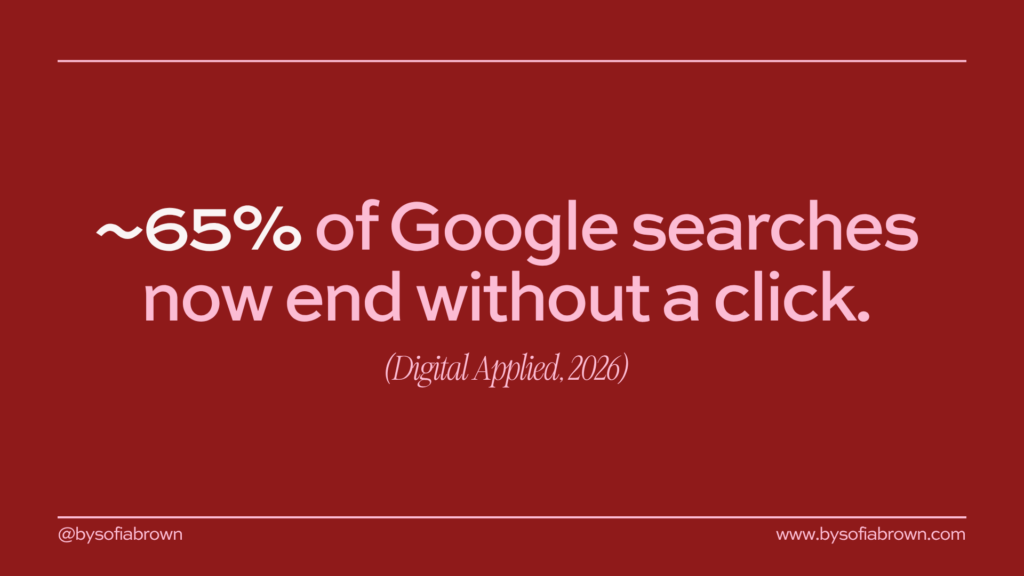
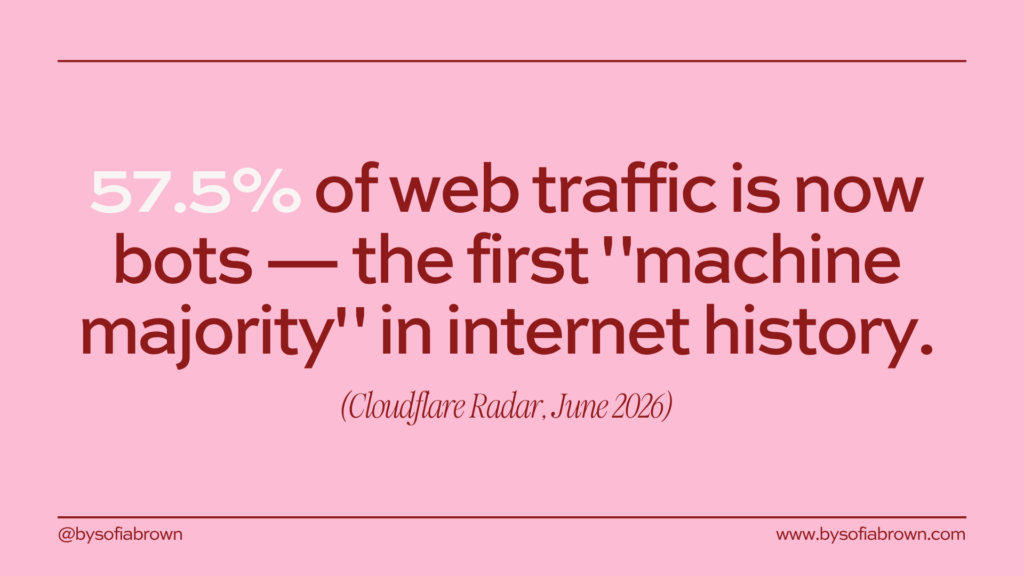
What happens now that the AI answer is the top of the search results section? And over 60% of searches end in a NO CLICK result.
Like, your blog doesn’t even stand a chance because that top search result section has been claimed by an AI result, which means the traffic you were banking on—the clicks—might never materialize at all.
AI can pull a summary from your blog post all it wants, but that doesn’t do jack for you if nobody’s actually clicking on your website.
99% of people won’t know (or care) that Claude used your blog as a reference, as long as they found their answer three seconds faster than before.
This is the shift happening right now, and it’s why we need to talk about AEO.
What is AEO, and how is it different from what I’ve been doing?
Answer Engine Optimization (AEO) is the practice of optimizing your content to get cited, quoted, and referenced by AI search engines like ChatGPT, Claude, Google AI Overviews, and Perplexity—instead of (or in addition to) chasing clicks from traditional Google search results.
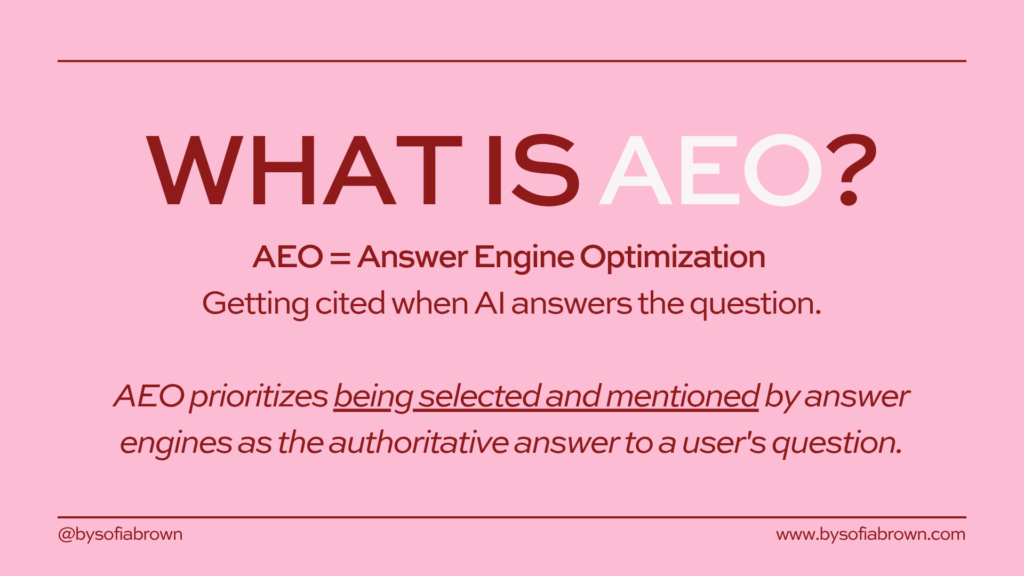
The goal isn’t clicks anymore. The goal is citations.
When a search engine references your blog post, your expertise, or your business as a source, you gain authority signals that matter to both robot crawlers and potential dream clients. You’re not relying on someone clicking through to your site; you’re building a presence in the places where people are actually getting their answers now.
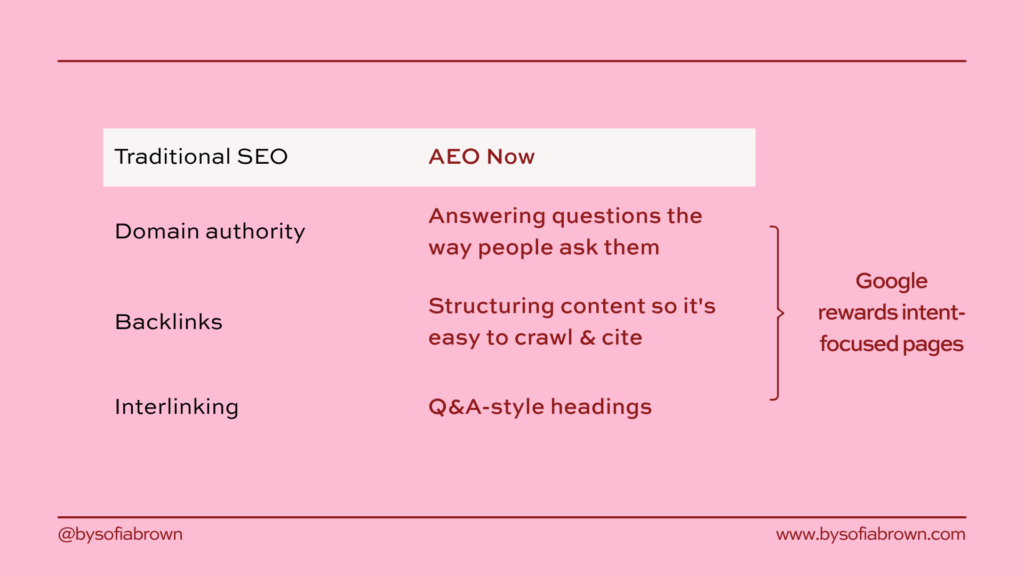
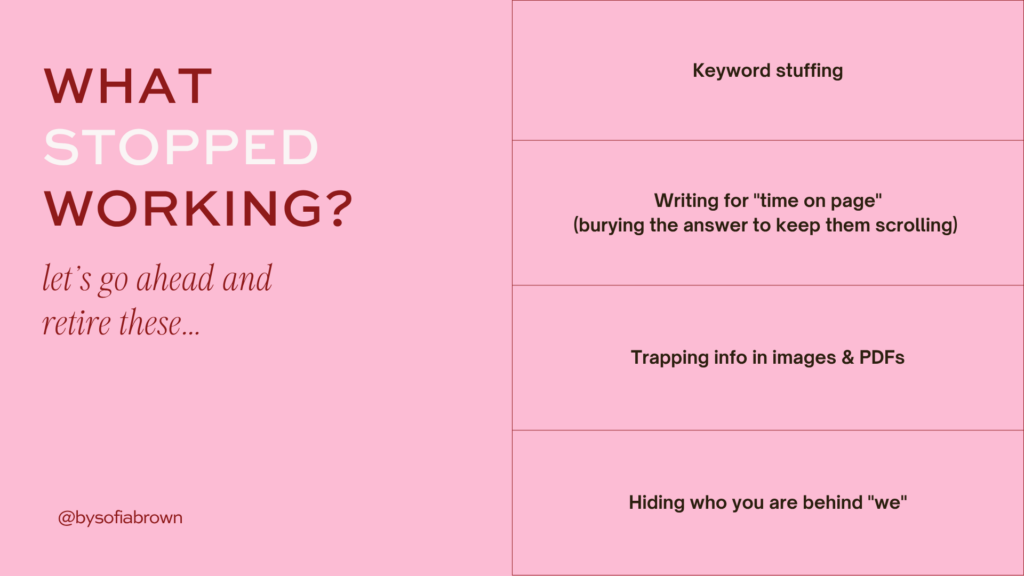
Here’s the thing about traditional SEO: for years, we optimized for backlinks, domain authority, exact keyword matches, and click-through rates. Google’s algorithm rewarded the sites with the most authoritative referring domains. So we built strategies around that.
But AI changed the game.
Now, instead of optimizing for “how many people will click on my result,” we’re optimizing for “will an AI system recognize my content as authoritative enough to cite it?”
It’s not that traditional SEO is dead. It’s not. Google still ranks pages. But AI search is happening on top of traditional search now, and if your strategy doesn’t account for that layer, you’re leaving visibility (and potential clients) on the table.
The shift means:
| Traditional SEO Prioritizes | AEO Prioritizes |
| Building backlinks | Answering questions directly |
| Increasing domain authority | Using proper nouns and brand names |
| Optimizing for exact keyword density | Structuring content as Q&A |
| Capturing clicks | Making it easy for AI systems to understand and cite your expertise |
Think of it this way: traditional SEO was about winning a position in the search results. AEO is about becoming a source that AI systems trust enough to reference.
How do I optimize my content for AEO across multiple platforms?
The answer isn’t just your blog anymore. AEO works across several interconnected platforms, and each one serves a different purpose in getting you cited and found:
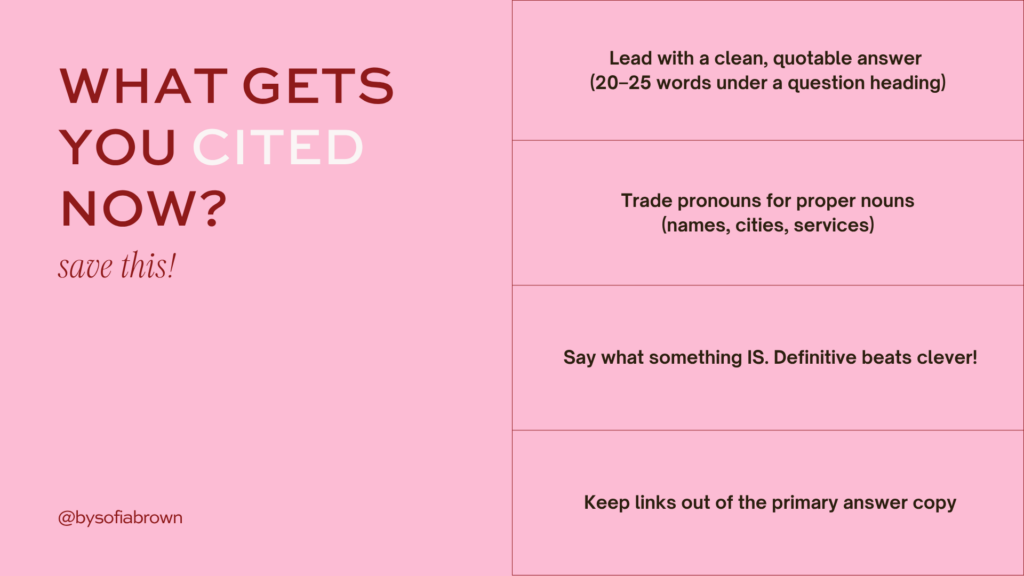
Your Blog: Answer Questions Directly (Get Cited in AI Overviews & ChatGPT)
Your blog is where you establish expertise through long-form articles, thought leadership pieces, listicle roundups, and more. Write your blog posts as direct answers to the questions your dream clients are actually asking.
Use question-based H2 headings. Structure your content so that someone (or an AI system) can scan it and immediately find the answer without digging through fluff. When you make your expertise easy to recognize, AI systems cite you.
For photographers, designers and other creative service providers, this might look like: “How much does an NYC engagement session cost?” or “What’s included in a branding guidelines deck?” First, answer the question clearly in the section right below the heading, then layer in your voice and experience.
A serious question I’ve been thinking about lately is: how long will it take for SEO plugins like Yoast and Rank Match to fully catch up to the new search landscape? These platforms have added “AI visibility” trackers and AI search tips; however, the primary framework is still built on traditional SEO best practices. It’s just something I’ve been curious about personally!
Pinterest: Discovery and Authority for Dream Clients
Pinterest is not a social platform—it’s a visual search engine, and it’s becoming increasingly integrated with AI search results.
When you pin your blog posts on Pinterest, you’re doing four things:
- Creating another pathway for dream clients to discover your content
- Signaling to AI systems that your content is worth sharing and re-sharing
- Building consistency in your messaging across platforms
- Increasing your visibility across image search
A well-optimized Pinterest strategy means your blog posts are getting pushed in front of the people who are actively searching for the solutions you offer—before they land on your site. That visibility alone builds authority.
Plus, when your pins get repinned and saved, that’s social proof that your expertise is worth sharing.
Read More: Behind-the-Scenes of My Pinterest Management Workflow
Google Business Profile: Local Authority & Review Signals
Your Google Business Profile is where AEO gets local. A complete, optimized profile with real reviews, accurate information, and consistent business details sends strong authority signals to both Google’s algorithm and the AI systems that reference it.
For photographers and designers offering local services, this is critical. AI systems use business information to validate expertise and recommendations. A robust Google Business Profile tells both AI and potential clients: “This business is real, established, and trusted by actual people.”
The most important thing to remember here is to keep your profile current. Make sure you’re visiting your profile at least once per month to post updates, correct any inaccuracies, and upload new photos. And don’t forget to respond to client reviews as soon as they come in! The newest guidance from Google recommends that you make updates to your profile once a week to avoid getting flagged as an inactive user.
Social Media & Website Mentions: Brand Recognition & Citation
This is the part many people miss: AI systems track mentions of your name, your business, and your expertise across the web.
When other websites mention you by name, when people quote you on social media, when your work gets referenced—that’s data AI systems use to understand your authority.
This is why the multi-platform strategy matters so much. It’s not just about each platform in isolation; it’s about creating a web of visibility that reinforces your expertise everywhere.
Read More: Marketing Without Social Media: Landing Dream Clients Without Relying on Algorithms
Here’s where it gets interesting: let’s say ChatGPT has a data-sharing deal with TikTok, and you don’t post on TikTok, but one of your competitors does. When your ideal client asks ChatGPT for a photography or design recommendation, ChatGPT pulls from its TikTok data and recommends your competitor instead of you.
Poof. That potential client never heard about you, even though you have a better portfolio, better reviews, and better prices.
Marketing is a multiplatform game now.
Even if one platform doesn’t seem relevant to your ideal customer, it might be relevant to ChatGPT or Google—the systems that are actually recommending you to your dream clients. That’s not to say you should panic if you don’t have a presence on every single social platform. Just make sure the platforms you are posting on contain information that’s original, accurate, optimized, and reliable.
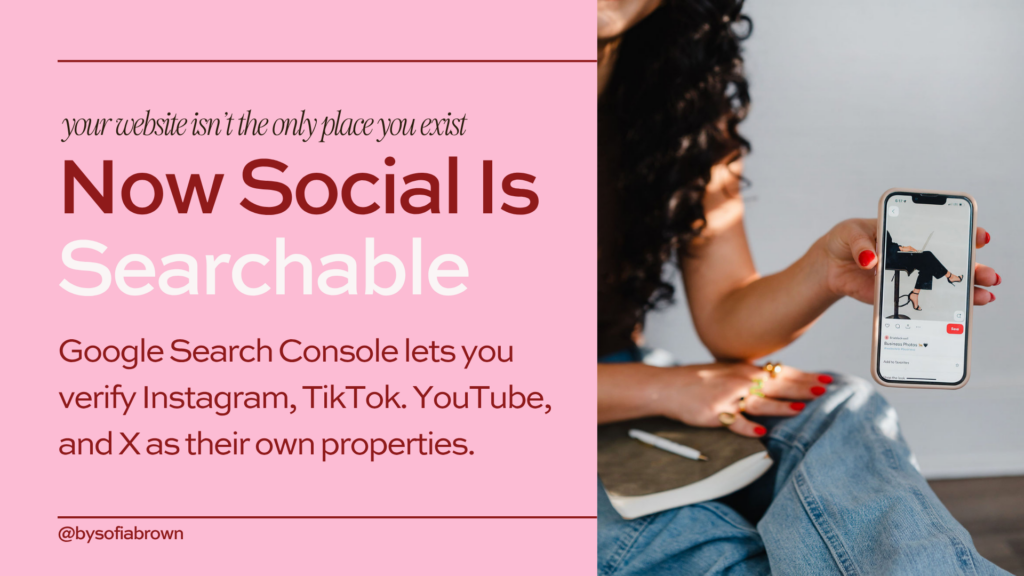
How to connect Google Search Console to your social media accounts →
Why do I need to change my search strategy right now?
The short answer: the AI landscape is evolving every single day, and your current strategy is probably built for a search environment that no longer exists.
At this point, it’s hard to tell if the AEO advice I’m giving you today will be totally comprehensive a month from now. It’s a scary thing to admit, but it’s true. The systems are moving that fast.
What I do know is this: the goal now is to get cited by LLMs as much as you possibly can to maintain traffic and eyeballs on your site. Because if you’re not being cited, you’re invisible to the people searching through AI.
For photographers and designers, this is especially urgent. Your dream clients are actively using AI to find recommendations. They’re asking ChatGPT “who are the top headshot photographers in Atlanta?” and “what should a brand photoshoot cost?” If your name, your portfolio, and your expertise aren’t in the training data and current sources that these systems reference, you’re missing those opportunities.
The old way of thinking about SEO—”I’ll rank for this keyword and get clicks”—assumes that search still works the way it did in 2023. It doesn’t. People aren’t scrolling through 10 blue links anymore. They’re reading an AI summary and clicking away (or not clicking at all).
The new way is: “Where can I make sure my expertise shows up when an AI is answering a question about my services?”
That requires a different strategy. It requires thinking about multiple platforms. It requires understanding that your blog, your Pinterest presence, your Google Business Profile, and your social mentions are all part of one interconnected visibility system.
This is the moment we stop optimizing for clicks and start optimizing for citations.
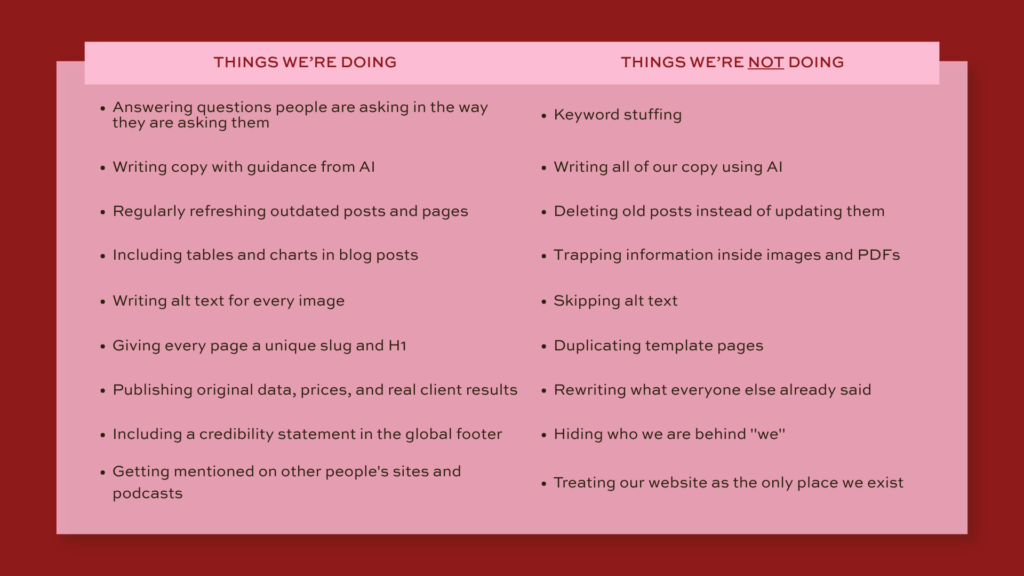
Optimizing For A Modern Search Strategy
Marketing used to be about guessing what Google wanted and building toward that. Now it’s about showing up in the places where your dream clients are actually searching—which increasingly means AI engines, not just traditional search.
The creative service providers who adapt first will own this space. The ones who are still optimizing for 2023 tactics will watch their visibility quietly disappear while they’re wondering why their traffic dropped. What’s important is being visible in all the right places, for all the right systems, so that when your dream clients ask for help, you’re the answer.
Ready to make sure your dream clients find you when AI answers their questions? A modern search strategy isn’t about guessing what Google wants—it’s about showing up in the places where your people are actually searching. Book a free Happy Hour strategy session with me, and let’s map out your AEO plan!